
How YouTube Conquered the Living Room: The CTV Revolution Reshaping Digital Marketing.
- Rohan Babu
- Apr 10, 2025
- 3 min read

The Big-Screen Takeover No One Saw Coming
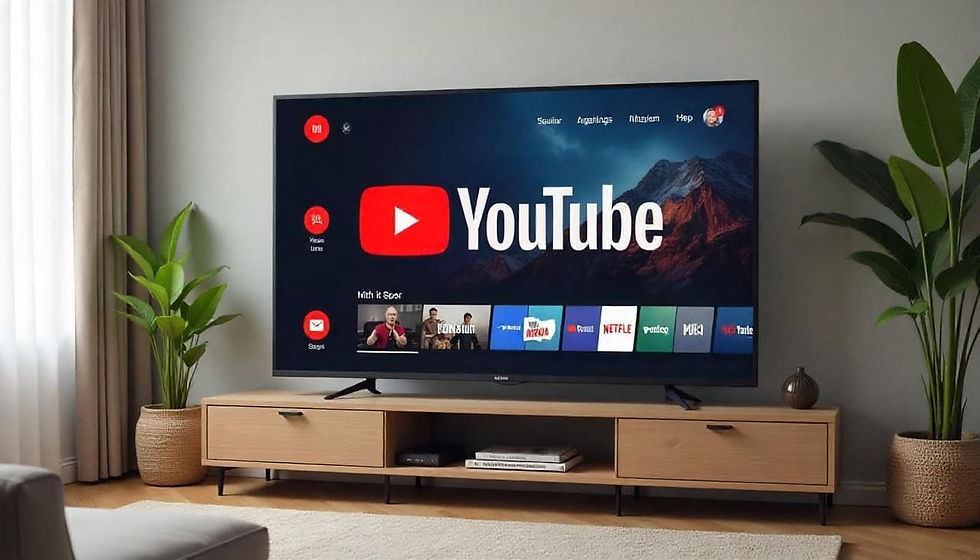
While marketers were busy perfecting their smartphone strategies, a quiet revolution was unfolding in living rooms worldwide. YouTube—once synonymous with mobile viewing—has steadily claimed territory on the largest screen in the house, fundamentally altering content marketing dynamics.
The numbers tell a compelling story: In 2024, YouTube's U.S. Connected TV (CTV) audience surpassed Amazon Prime Video's total U.S. audience. By 2025, projections indicate that 68.8% of YouTube's massive 248.6 million monthly viewers will be watching on television screens, positioning YouTube's CTV audience nearly on par with Netflix's total audience across all devices.
This shift isn't merely about changing viewing habits—it represents a fundamental restructuring of digital advertising's power centers and content creation strategies.

The Advertising Gold Rush (CTV Marketing)
The financial implications are profound. Advertisers poured $15.6 billion into internet advertising over the last financial year—a 9.7% increase from previous spending. More telling is the 18.6% growth in video advertising, which reached $4.1 billion, with CTV capturing 55% of investments in content publishers' video inventory.
This surge reflects a growing recognition among marketers: CTV offers unique advantages that other digital channels struggle to match.
65% of advertisers report increased sales when incorporating performance TV alongside search and social channels
53% of marketers believe CTV provides superior brand safety compared to social media platforms
40% consider CTV audiences to be highly engaged with content
Content Creators Follow the Money
The CTV phenomenon has triggered significant strategy shifts among YouTube creators, who are adapting their content to capitalize on television viewers' different consumption patterns and higher revenue potential.
Take YouTuber Jordan Matter, who discovered that 65% of his total ad revenue came from television viewers, despite them representing just 45% of his audience. This revenue imbalance has prompted creators to produce:
Longer-form videos that support additional ad breaks
Themed compilations that encourage extended viewing sessions
Content specifically designed for lean-back, large-screen consumption
TheSoul Publishing exemplifies this approach, packaging content into hours-long themed videos that have driven substantial growth in TV viewership, particularly in emerging markets like India.
The Global Picture
YouTube's television dominance isn't confined to Western markets. In India, YouTube has emerged as the fastest-growing screen platform over the past five years, with millions of viewers consuming content through Connected TVs.
This global expansion coincides with traditional broadcasters moving in the opposite direction. British media giant ITV plans to make hundreds of hours of programming available on YouTube, acknowledging that audience accessibility now trumps platform exclusivity.
Strategic Implications for Marketers
For digital marketers, these developments demand a strategic recalibration:
Format Adaptation: Content optimized solely for mobile viewing may underperform on television screens, where different visual hierarchies and attention patterns prevail.
Audience Expansion: CTV extends reach to demographics less engaged with mobile content, including older, higher-income viewers and family co-viewing audiences.
Measurement Evolution: Performance metrics must account for CTV's unique impact on the consumer journey, often occurring earlier in the purchase funnel than direct-response channels.
Budget Reallocation: The traditional separation between "digital" and "TV" advertising budgets grows increasingly arbitrary as platforms like YouTube blur these distinctions.
Looking Ahead
As YouTube continues its march across living room screens, marketers face both opportunity and challenge. Those who effectively bridge the gap between digital precision and television's immersive impact will gain significant competitive advantage.
The CTV revolution represents not merely a shift in device preference but a fundamental rethinking of how consumers engage with digital content. For brands and creators alike, mastering this evolving landscape has become not just advantageous, but essential.

Comments